
Leather Jacket Trends 2026: What Fashion Brands Should Develop Next
Explore the leather jacket trends shaping 2026—brown bombers, suede, moto and vintage finishes—plus a private-label production guide for fashion brands.
7/12/20268 min read
Leather Jacket Trends Shaping 2026
A visual guide for fashion brands, private labels and boutique buyers.
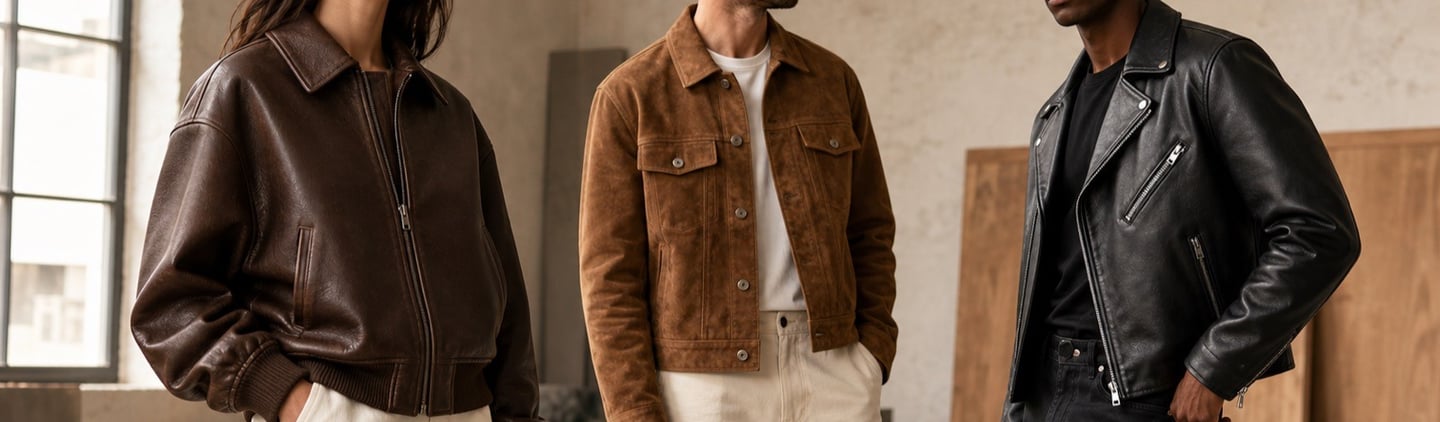
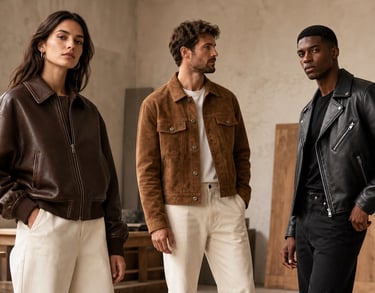
The biggest leather jacket trends for 2026 are oversized bombers, chocolate and tobacco brown, soft suede, clean funnel-neck silhouettes, vintage racing references and cropped moto jackets. For brands, the opportunity is not simply to copy a trending shape. It is to translate the right silhouette into a distinctive, well-made product with suitable leather, consistent fit and brand-specific details.
Fashion coverage from Vogue, Elle and British Vogue shows the same commercial direction: brown is challenging black as the default, bombers are staying strong, suede has moved beyond a short-lived seasonal moment, and lived-in texture is making leather feel more personal. These trends are especially useful for independent labels because a jacket can act as a high-visibility “hero product” while supporting multiple price points, genders and seasons.
This guide is for fashion founders, boutique buyers, merchandisers and product teams deciding what to sample for Autumn/Winter 2026 and beyond.
The 2026 leather jacket trends at a glance
Oversized leather bomber
Dropped shoulder, roomy body, rib hem, soft leather · Contemporary, streetwear and unisex brands · Chocolate lamb, sheep or soft goat leather
Brown and tobacco tones
Espresso, chocolate, cognac, tobacco and sepia · Premium casual and heritage collections · Tonal lining, antique brass or matte hardware
Suede trucker and overshirt
Clean collar, patch pockets, easy layering fit · Quiet-luxury, resort and transitional ranges · Lightweight goat or sheep suede
Minimal funnel-neck jacket
Stand collar, restrained hardware, clean front · Modern premium and work-to-weekend labels · Supple dark brown or black leather
Vintage racing jacket
Curved panels, contrast piping, aged finish · Youth, music, motorsport-inspired and resale-led brands · Burgundy, oxblood or distressed brown leather
Cropped moto jacket
Short body, defined shoulder, asymmetric zip · Womenswear and occasion-led fashion labels · Soft black, brown or fashion-colour leather
1. The oversized leather bomber is the lead commercial shape
The oversized leather bomber has carried its momentum into 2026. Its appeal comes from the balance between impact and wearability: the volume looks current, while the flight-jacket foundation is familiar to customers. It can be merchandised with denim and knitwear or used to soften tailored trousers and skirts.
For development, “oversized” should still be controlled. The shoulder drop, sleeve pitch, body length and rib tension determine whether the jacket feels intentionally relaxed or simply too large. Soft sheep, lamb or selected goat leather helps the jacket drape without becoming heavy. Brands can build identity through a custom lining, zip puller, embroidery, embossed patch or a distinctive collar proportion.
Best product brief: a waist-length, relaxed unisex bomber in chocolate brown with low-shine hardware, a clean front and enough room for mid-weight layering.
2. Chocolate brown is the new core neutral
Black leather remains permanent, but brown is the more directional colour story for 2026. Chocolate, espresso, tobacco, cognac and sepia tones work particularly well because they highlight grain and patina. They also connect naturally with the wider move toward earth tones, workwear and vintage-inspired dressing.
Brown gives brands room to differentiate without taking the inventory risk of a bright fashion colour. A single silhouette can be offered in black as the evergreen option and deep chocolate as the trend-led option. Tonal thread produces a polished result; contrast topstitching pushes the style toward heritage or Western references.
Commercial advantage: brown photographs with more texture than flat black and can make online product imagery feel richer, especially in close-up detail shots.
3. Suede moves from seasonal trend to collection staple
Suede jackets continue to gain relevance, particularly in tobacco, camel and warm mid-brown shades. The tactile surface gives a trucker, overshirt or bomber a softer character than polished leather, making it useful for premium casual and “quiet luxury” positioning.
Material selection is critical. Brands should confirm nap direction, shade consistency, rub fastness and panel matching during sampling. Suede also needs accurate care instructions and protective packaging because its surface can mark more easily in transit.
For a lower-risk first order, choose a simple trucker or zip-through shape with limited panel complexity. This keeps the material as the visual focus and makes colour matching easier in small-batch production.
4. Clean funnel-neck jackets offer a polished alternative to the biker
The funnel-neck or stand-collar jacket is growing as a minimal, refined alternative to the classic asymmetric biker. The look relies on a precise collar, smooth front panels and restrained hardware. In dark brown, oxblood or black, it can move from office tailoring to weekend denim.
This trend is a useful bridge for brands whose customers want leather but do not identify with a heavily detailed moto style. A two-way zip, discreet welt pockets and tonal lining can add function without disrupting the clean silhouette.
5. Vintage racing jackets bring personality and storytelling
Racing references remain visible through panelled construction, curved seams, piping, shoulder details and aged finishes. The strongest versions feel collected rather than costume-like. Burgundy, faded black, cream accents and distressed brown support that lived-in quality.
Brands should avoid relying on unlicensed logos or direct replicas of archival team jackets. Original panel layouts, proprietary patches and custom colour combinations create a recognisable product without intellectual-property risk. A manufacturer should translate inspiration into an original pattern and provide artwork placement guidance before production.
6. Cropped moto jackets sharpen womenswear collections
Cropped moto jackets answer the continued demand for shorter proportions with high-rise trousers, denim and skirts. In 2026, the silhouette ranges from compact and structured to softly boxy. A slightly longer back body, considered sleeve width and well-placed pocket bags can improve comfort without losing the cropped effect.
Black is the safest core colour, while chocolate, burgundy and muted fashion colours can create editorial impact. Lightweight leather is usually better for a close or cropped fit, particularly when the jacket is expected to work indoors as part of an outfit.
How should a fashion brand choose which trend to manufacture?
Start with the customer and use the trend as a filter—not the other way around.
Define the wearing occasion. Is the jacket for everyday layering, work, nightlife, travel or statement dressing?
Set the target retail price. Leather type, hardware, lining, construction and order quantity must support the margin.
Choose one hero detail. Let the silhouette, material, finish or branding lead instead of adding every trend at once.
Test fit on the intended customer. A unisex bomber and a fitted cropped moto require different blocks and grading rules.
Review the sample in movement. Check arm mobility, collar comfort, zip function, pocket access and how the leather folds when seated.
Plan repeatability. Confirm whether the same leather colour and finish can be sourced for repeat orders, or agree on an acceptable shade tolerance.
What leather is best for a private-label jacket?
There is no single best leather; the correct choice depends on silhouette, hand feel, price and end use.
Sheep or lamb leather
Soft, light, smooth drape · Bombers, cropped jackets and fashion-led styles
Goat leather
Durable, visible grain, versatile weight · Bikers, bombers and everyday jackets
Cow leather
Firm, robust, substantial · Structured moto, workwear and heavy vintage styles
Suede
Soft nap, rich colour, tactile finish · Truckers, overshirts and premium casual jackets
Deadstock or surplus leather
Existing material given a productive use; availability can be limited · Small capsules, limited editions and low-waste collections
Ask for physical swatches whenever possible. A screen cannot accurately communicate weight, softness, nap, grain or colour variation.
Quality details buyers notice—and returns expose
A strong trend may win the first click, but construction quality earns the repeat order. During sampling and pre-shipment inspection, review:
balanced collar points and lapels;
even topstitching with secure back-tacking;
smooth zips and firmly attached snaps;
matched panel colour and grain within the agreed tolerance;
clean pocket bags and functional pocket openings;
lining ease that allows movement without pulling;
reinforced stress points at pockets, armholes and closures;
accurate measurements across the approved size set;
correct labels, packaging and carton markings.
Sustainable leather jacket development: questions brands should ask
“Sustainable” should be supported by specific practices rather than used as a vague product claim. Ask a prospective manufacturing partner:
Can you offer deadstock, surplus, recycled or upcycled material options?
Is production made to order to reduce unnecessary inventory?
How are cutting offcuts sorted, reused or disposed of?
What quality and environmental systems can you document?
Can you provide accurate fibre, leather and care-label information?
How do you manage social compliance, worker safety and traceability?
Hidayat International offers made-to-order production and works with recycled, deadstock, surplus and responsibly sourced leather options subject to availability. Buyers should confirm the exact material and documentation required for each order before making product-level environmental claims.
Why small-batch production matters in a trend-driven market
An independent brand should not need to overbuy to test a promising style. Lower minimum order quantities allow teams to validate colour, fit and customer response before scaling. Hidayat International supports private-label development with typical custom-order minimums of 10–30 pieces per style, per leather type or colour, depending on the project.
Small batches are especially useful for:
testing a new jacket category;
releasing numbered or limited capsules;
offering multiple colours without excessive stock;
using available deadstock leather;
gathering fit feedback before a larger repeat order.
From trend idea to production-ready leather jacket
A clear development process reduces delays and misunderstandings:
Share a sketch, reference images or tech pack and identify which details are inspiration rather than exact requirements.
Confirm target price, quantity, size range, delivery market and intended launch date.
Select leather, colour, lining, hardware, labels and packaging.
Develop and review the first sample.
Approve fit, measurements, workmanship, material and branding through a written comments sheet.
Confirm the pre-production sample and size grading.
Begin bulk production with agreed quality checkpoints.
Complete final inspection, packing and shipping documentation.
The opportunity for fashion brands in 2026
The commercial message is simple: customers still want the identity and longevity associated with a leather jacket, but the silhouette and finish have moved forward. The most useful 2026 directions—oversized bombers, brown tones, suede, funnel necks, racing references and cropped motos—can all be developed as original products rather than short-lived copies.
Hidayat International is a leather jacket manufacturer in India offering private-label development, customization, low MOQs and sustainable material options for fashion brands and boutiques worldwide. If you are planning a 2026 capsule, share your concept, target quantity and preferred leather to discuss feasibility, sampling and pricing.
Explore private-label leather jacket manufacturing or request a quote.
Frequently asked questions
What leather jackets are trending in 2026?
Oversized leather bombers, chocolate-brown jackets, tobacco suede truckers, clean funnel-neck jackets, vintage racing styles and cropped moto jackets are the strongest directions. Lived-in texture, earthy colour and versatile layering shapes connect these trends.
Are brown leather jackets replacing black?
Brown is the more directional neutral in 2026, but it is not replacing black completely. For many brands, black remains the evergreen option while chocolate, espresso or tobacco brown provides a trend-led second colour.
What is the best leather for an oversized bomber?
Soft sheep, lamb or selected goat leather usually gives an oversized bomber the required drape without excessive weight. The final choice should be based on target price, grain, durability and desired finish.
Can a small fashion brand order custom leather jackets?
Yes. Hidayat International typically supports custom private-label orders from 10–30 pieces per style, per leather type or colour, depending on design and material availability. Sampling is recommended before bulk production.
Can leather jackets be customized with a brand logo and labels?
Yes. Common options include woven neck labels, care labels, custom lining, embroidery, embossing, patches, branded zip pullers, packaging and hangtags. Feasibility depends on artwork, placement, quantity and material.
How long does private-label leather jacket production take?
Timelines depend on design complexity, material availability, sample approvals, order size and shipping method. Brands should allow time for material selection, one or more sample rounds, grading, bulk production and final inspection. Confirm a written schedule for each order.
What should a buyer send to request a leather jacket quotation?
Send reference images or a tech pack, target quantity, size range, leather preference, colour, branding requirements, delivery country and desired launch date. A target price is also useful because it helps the manufacturer recommend suitable materials and construction.

Contact Us
Feel free to contact us with any questions or concerns. You can use the form below or email us directly - info@hidayatinternational.com
But to get the fastest response get in touch on
Whatsapp: +91 84236 33077
We appreciate your interest and look forward to hearing from you.


contact
Newsletter
WhatsApp - +91 84236 33077
info@hidayatinternational.com
© 2025. All rights reserved.
ABOUT
HIDAYAT