
Leather Jacket Production Checklist: 8 Buyer Approval Gates
Use this leather jacket production checklist to control the brief, materials, sampling, bulk approval, quality inspection, packing, and dispatch for brands.
Hidayat International
7/16/20268 min read
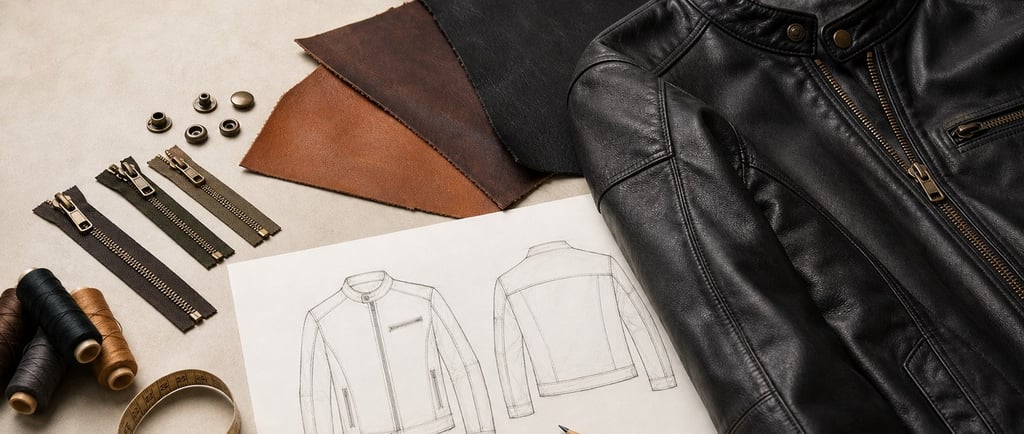
Private-label leather jacket manufacturing turns a brand's design brief into an approved sample, a controlled bulk order and a shipment that matches the agreed specification. The safest process uses written approval gates for the design, leather, trims, fit, measurements, branding, workmanship and packing. A jacket should not move to the next stage because it "looks close enough."
This guide is for founders, product developers, sourcing teams and boutique buyers preparing a custom leather jacket. It explains what to send a manufacturer, what to approve at each stage and where preventable delays usually begin. It does not give a universal production timeline because material availability, design complexity, sample comments, quantity and shipping method differ by project.
The manufacturing process at a glance
1. Product brief
Buyer provides: Sketch, tech pack or references; quantity; market; target launch
Manufacturer returns: Feasibility questions and scope
Approval gate: Written development brief2. Materials and trims
Buyer provides: Leather direction, colour and branding needs
Manufacturer returns: Swatches and proposed components
Approval gate: Material and trim approval3. Pattern and first sample
Buyer provides: Base size and fit direction
Manufacturer returns: First development sample
Approval gate: Consolidated sample comments4. Fit and construction revision
Buyer provides: Measurements and one comments sheet
Manufacturer returns: Revised sample or documented corrections
Approval gate: Fit, construction and appearance approval5. Pre-production setup
Buyer provides: Size range, grading, labels and packing files
Manufacturer returns: Pre-production sample and production specification
Approval gate: Signed or clearly recorded PP approval6. Bulk production
Buyer provides: Purchase order and approved specification
Manufacturer returns: Production updates and agreed checkpoints
Approval gate: No unapproved substitutions7. Quality control
Buyer provides: Inspection criteria and tolerances
Manufacturer returns: Inspection findings and corrective action, if needed
Approval gate: Release decision8. Packing and dispatch
Buyer provides: Carton marks, delivery details and documents required
Manufacturer returns: Packing list and shipment documents
Approval gate: Dispatch approval
1. Start with a product brief the manufacturer can act on
A useful inquiry is more than a mood-board image. It explains the commercial and technical boundaries of the product. Send the clearest source you have, whether that is a tech pack, an annotated sketch, an existing sample or several reference images. Mark which elements are requirements and which are inspiration.
Include:
jacket type and intended customer;
target quantity per style, colour and size;
delivery country and desired launch date;
base size, measurement chart and fit direction;
preferred leather, colour, finish and approximate weight or hand feel;
lining, hardware, pockets and construction details;
labels, logo applications, packaging and hangtags;
target price range, if available;
required tests, documentation or buyer compliance standards.
If the brief is incomplete, ask the manufacturer to list the open decisions before quoting or sampling. This creates one shared record and reduces assumptions.
Hidayat International can begin from a tech pack, sketch or reference and supports private-label customization. Buyers planning a first capsule can review the company's private-label manufacturing service before submitting a project.
2. Approve the leather, lining, hardware and branding system
The leather changes the way a jacket hangs, folds, ages and accepts stitching. A structured cow or buffalo leather will not behave like a light, soft sheep or lamb leather. Suede introduces different shade, nap and care considerations. Review physical swatches whenever possible because screens do not show hand feel, thickness, surface variation or exact colour reliably.
Approve the complete material system, not only the shell leather:
leather article, colour and finish;
acceptable natural grain and shade variation;
lining composition, colour and weight;
zipper brand or performance specification, size, tape colour and finish;
snaps, buckles and other hardware finishes;
thread colour and topstitching appearance;
label artwork, care content and country-specific information;
logo method such as embossing, embroidery, patch or custom puller;
packaging, protective tissue, polybag and carton requirements.
Availability must be confirmed for the exact order. If a buyer requests a particular environmental, chemical or traceability standard, the relevant certificate or test report should be checked for its scope, issuing body and validity. Leather Working Group explains that its audit standard assesses leather-manufacturing facilities, while OEKO-TEX describes LEATHER STANDARD as testing leather articles and components for harmful substances. Neither reference proves that a particular Hidayat order carries that certification. Documentation must be verified project by project.
Use Hidayat's leather material overview as a starting point, then request project-specific swatches and documentation.
3. Develop the pattern and first sample
The pattern translates the design into shaped panels, seam allowances, pocket positions, collar geometry and sleeve construction. The first sample tests whether those decisions work together in the selected material.
Before sampling, identify the base size and intended fit. Words such as "oversized," "cropped" and "regular" are not measurements. Provide a measurement chart or a reference garment with clear instructions about what may be copied and what must be changed. For an original design, confirm that third-party logos, artwork and protected product details are not being reproduced without permission.
The first sample should be treated as a development tool, not an automatic production standard. Its purpose is to expose questions about proportion, mobility, pocket access, closure function, leather behaviour and visual balance.
4. Review the sample with one consolidated comments sheet
Unstructured feedback creates conflicting revisions. Gather comments from design, merchandising, fit and production into one numbered document. Add annotated photographs and revised measurements where useful.
Review the sample in five passes:
Appearance: silhouette, length, collar shape, pocket and seam placement, hardware colour and branding.
Fit: chest, shoulder, sleeve, body length, hem and layering allowance on the intended wearer.
Movement: reach, bending, sitting, fastening and pocket use.
Workmanship: stitch consistency, panel matching, edge finishing, zipper operation, snap security and lining control.
Specification: every measurement, material, trim, label and packaging detail against the brief.
For every comment, state the issue, required change and target measurement or visual outcome. Mark accepted natural leather variation separately from correctable workmanship. Hidayat's leather jacket quality inspection guide provides a deeper checklist for stitching, panels, hardware and lining.
5. Lock the pre-production standard and size grading
Once the development sample is approved, the project needs a single production reference. Depending on the project, this may be a pre-production sample, sealed sample, approved comments sheet and final specification used together.
Confirm:
final pattern and base-size measurements;
grading rules for every ordered size;
approved leather and the process for handling shade variation;
all components and permitted substitutes, if any;
label and packaging artwork versions;
workmanship standards and measurement tolerances;
inspection method and approval authority;
quantity by style, colour and size.
Do not rely on approval spread across chat messages. A dated specification and a clear final approval reduce ambiguity for both buyer and production team.
6. Plan bulk production around the approved specification
Bulk production should reproduce the approved standard at scale. The manufacturer plans material allocation, cutting, preparation, stitching, finishing and packing around the purchase order and final specification.
Buyers should agree in advance how material shortages or unavailable trims will be handled. No visually similar leather, zipper, lining or label should be substituted without written approval. Where natural variation is expected, define how panels will be matched within each garment and what level of variation is acceptable across the order.
Hidayat International states typical custom-order minimums of 10 to 30 pieces per style, per leather type or colour, depending on the project. Treat that as an inquiry range, not automatic acceptance of every design or material at the minimum. Share the quantity breakdown so feasibility can be confirmed.
7. Inspect quality before release
Quality control is easier when the acceptance standard was written before production. Inspection should compare the order with the approved sample, final specification and agreed tolerances.
Check a representative sample or the inspection scope agreed with the buyer for:
correct style, colour, sizes and quantities;
measurement conformity;
panel colour, grain or nap matching within the agreed standard;
stitching, seam security and stress-point reinforcement;
zipper, snap, buckle and pocket function;
lining attachment and freedom of movement;
labels, logo applications and care information;
stains, marks, odour or damage outside the accepted material character;
folding, protective packing and carton marks.
Record defects by type and severity, identify the affected quantity and agree corrective action before shipment. A photograph without a specification reference is useful evidence but not a complete quality decision.
8. Confirm packing, documents and dispatch
The final handoff is commercial as well as physical. Before dispatch, confirm the consignee details, shipping method, carton marks, size assortment, packing list and any destination-specific documents requested by the buyer or logistics provider.
The buyer should also know who is responsible for freight booking, import clearance, duties and final delivery. These responsibilities depend on the agreed commercial terms and destination. Do not assume that a quoted product price includes every shipping or import cost.
How long does private-label leather jacket manufacturing take?
There is no responsible universal answer. The schedule depends on how complete the brief is, whether materials are readily available, the number of sample rounds, grading and size-set requirements, order quantity, production loading, inspection findings and shipping method.
Ask for a milestone schedule that separates:
brief review and material selection;
first sample development;
buyer review time;
revision or pre-production approval;
bulk production;
inspection and corrective action allowance;
packing and transit.
The schedule should also name the decision owner for each approval. Buyer feedback time is part of the critical path, so internal approval delays must be included rather than hidden inside the supplier's estimate.
Buyer checklist before requesting a quotation
☐ Product sketch, tech pack, annotated reference or physical sample
☐ Quantity by style, colour and size
☐ Base size, measurements and fit direction
☐ Leather, colour, finish and hand-feel direction
☐ Lining, zipper, snaps, buckles and thread requirements
☐ Labels, logo application, packaging and artwork files
☐ Delivery country and desired launch date
☐ Target price range, if available
☐ Required testing, documentation and inspection standard
☐ One contact who can consolidate and approve comments
If you are still choosing the silhouette, review Leather Jacket Trends 2026. For general ordering questions, use Hidayat's leather manufacturing FAQs.
Start a private-label leather jacket project
A strong first inquiry gives the manufacturer enough information to recommend the next useful step. Send your sketch, tech pack or references with the target quantity, leather direction, size range, delivery country and desired launch date. Hidayat International can then review project feasibility, sampling inputs and the decisions that must be confirmed before production.
Discuss your leather jacket project or explore Hidayat's leather jacket manufacturing range.
Frequently asked questions
What is private-label leather jacket manufacturing?
It is the development and production of leather jackets to a buyer's approved design, materials, measurements, branding, quality standard and packaging. The finished product is prepared for the buyer's brand rather than sold under the manufacturer's name.
Do I need a tech pack to make a custom leather jacket?
A complete tech pack is the clearest starting point, but Hidayat International can begin from sketches or reference images. The buyer still needs to confirm measurements, materials, construction, branding, quantity and approval criteria before bulk production.
Can I approve a sample before bulk production?
Yes. Hidayat International offers sampling so the buyer can review fit, workmanship, materials and details before confirming production. Record all revisions and final approval in writing.
What information is needed for a leather jacket quotation?
Provide the design or reference, quantity by style and colour, size range, leather preference, lining and hardware needs, branding, delivery country and desired launch date. A target price range and required documentation help the manufacturer recommend feasible options.
What is Hidayat International's minimum order quantity?
The website states a typical custom-order range of 10 to 30 pieces per style, per leather type or colour. The exact minimum depends on the design, material, colour, components and project feasibility.
Editorial research sources

Contact Us
Feel free to contact us with any questions or concerns. You can use the form below or email us directly - info@hidayatinternational.com
But to get the fastest response get in touch on
Whatsapp: +91 84236 33077
We appreciate your interest and look forward to hearing from you.


contact
Newsletter
WhatsApp - +91 84236 33077
info@hidayatinternational.com
© 2025. All rights reserved.
ABOUT
HIDAYAT